


Attila Németh, Senior Research Fellow of the Institute of Philosophy together with Andreas Blank, has co-edited a major new international volume with Routledge, bringing together cutting-edge scholarship on one of the most fundamental yet strikingly neglected dimensions of philosophical thought: esteem and self-esteem.
Esteem and Self-Esteem in the History of Philosophy offers the first broad-ranging historical investigation of concepts that lie at the intersection of human emotion, ethics, psychology, social relations, dignity, and the formation of the self by an outstanding international group of scholars.
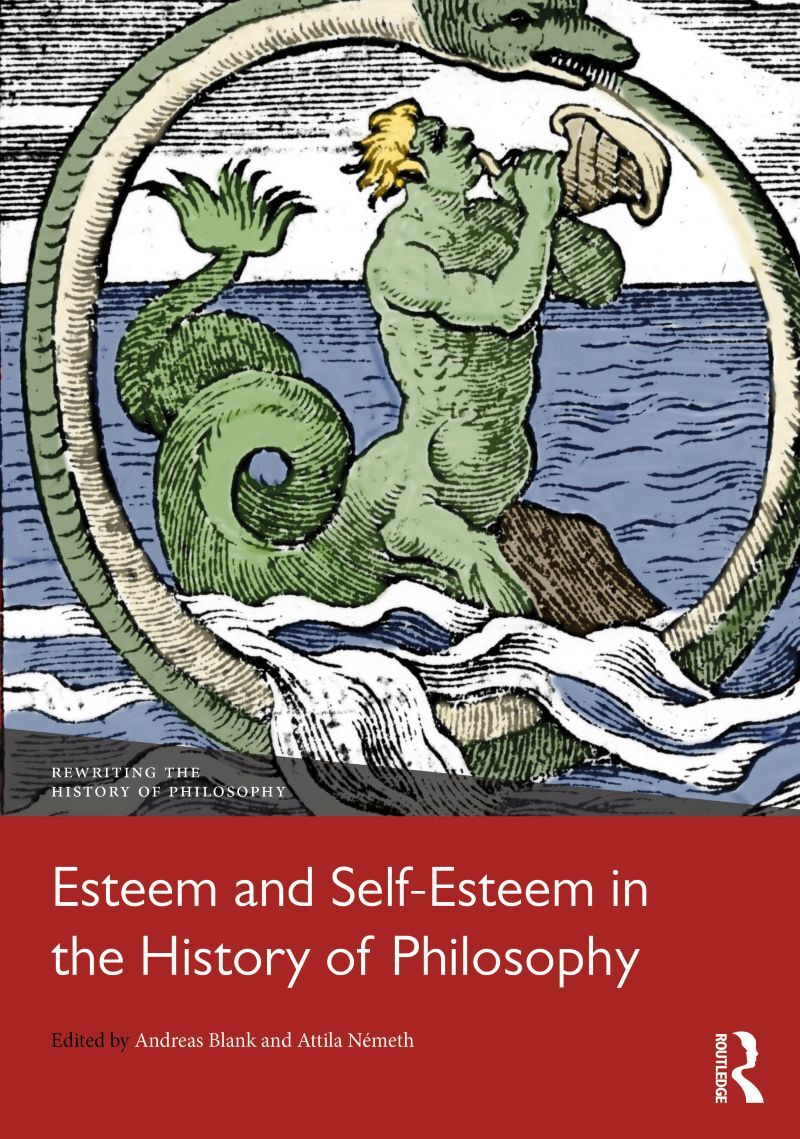
With 27 chapters organized into eight thematic parts, the volume presents an exceptionally broad intellectual panorama:
- From Poetry to Philosophy
- Self-Knowledge and the Normative Foundations of Self-Esteem in Classical Greek Philosophy
- Interiority and the Transformation of Selfhood in Hellenistic and Later Ancient Philosophy
- Cross-Cultural Perspectives on Esteem and Self-Cultivation
- Reputation, Virtue, and Moral Theology in the Medieval World
- Early Modern Moral Psychology and the Social Dynamics of Esteem
- Gender and the Politics of Self-Worth
- Esteem, Community, and Modern Social Theory
The significance of the volume lies in its historical and cross-cultural perspective, making it a particularly valuable resource for scholars and students working in the history of philosophy, ethics, political philosophy, moral psychology, intellectual history, and sociology. At the same time, it provides important theoretical resources for contemporary discussions of well-being, dignity, identity, and mental health.
Co-edited by Attila Németh and Andreas Blank, and the result of a major international scholarly undertaking, Esteem and Self-Esteem in the History of Philosophy , published by Routledge in its Rewriting the History of Philosophy series, opens up an important field of inquiry. It makes a significant contribution to the history of philosophy and to the study of how ideas about the self and human worth have emerged, developed, and changed over time.


