


Béla Vilmos Mihalik, Senior Research Fellow and Scientific Secretary of the Institute of History at ELTE RCH, and Assistant Professor at the Department of Auxiliary Sciences of History, ELTE Faculty of Humanities, has been awarded the prestigious Consolidator Grant of the European Research Council (ERC).
Among the two Hungarian awardees this year, he is the only researcher from the humanities to receive support in this category, making this the third ERC project to be carried out at the Institute of History.
Results of the record-breaking 2025 ERC Consolidator Grant
According to the published ERC Consolidator Grant results this year’s awardees will implement their projects at research institutions across 25 EU Member States and associated countries. The successful applicants represent 44 nationalities, with the highest numbers coming from the United Kingdom (66 projects), Germany (58), the Netherlands (40), and Spain (26). Women lead 38% of the funded projects.
In 2025, a total of 3,121 researchers applied for the Consolidator Grant — a 35% increase compared to the previous year and the highest number since the ERC’s establishment in 2007. Ultimately, 349 projects received a total of €728 million in funding, meaning that only 11.2% of proposals were successful. In the Social Sciences and Humanities domain, 1,037 proposals were submitted and 115 were funded; of these, 17 projects were selected in the SH6 panel (“The Study of the Human Past”), which encompasses archaeology and history — the field in which Béla Vilmos Mihalik achieved his outstanding result.
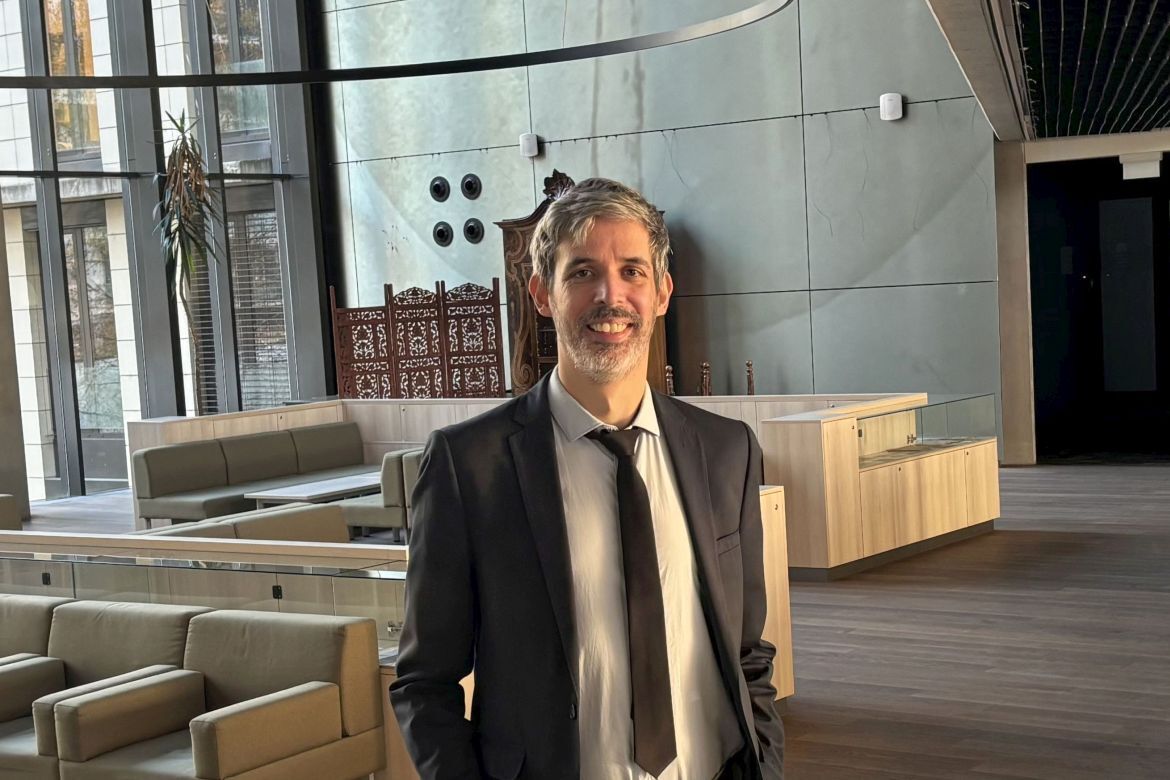 Béla Vilmos Mihalik
The role of the ERC funding
The European Research Council is the European Union’s most significant funding body for frontier research, providing long-term support for high-risk, high-gain scientific projects. Researchers of any age, gender, or nationality may apply, provided that the funded research is carried out in Europe. ERC-funded projects span a wide range of disciplines, including physical sciences and engineering, life sciences, and the humanities and social sciences.
The ERC is governed by an independent body, the Scientific Council. Its budget for the 2021–2027 cycle exceeds €16 billion and falls under the authority of the European Commissioner for Innovation and Research, Ekaterina Zaharieva. Maria Leptin, President of the ERC since 2021, commented:
“To see all this talent with groundbreaking ideas, based in Europe, is truly inspiring. This bold research may well lead to new industries, improve lives and strengthen Europe’s global standing. This was one of the most competitive ERC calls ever, with record demand and also many excellent projects left unfunded. It is yet another reminder of how urgent the call for increased EU investment in frontier research has become.”
The project
The project led by Béla Vilmos Mihalik examines how popular politics shaped the late phase of Catholic confessionalisation and early modern state building in East Central Europe between 1650 and 1800. The research focuses on local communal practices and explores how social groups with little or no formal political power were nevertheless able to influence broader historical processes, such as late Catholic confessionalisation and state formation.
The project uses one of the most widespread local institutions in East Central Europe — the Roman Catholic parish — as its comparative framework. It explores patterns of communal supervision over parishes, the political instruments employed, and both the internal and external networks of communities across six Catholic dioceses of differing historical backgrounds in the Habsburg Monarchy and the Polish–Lithuanian Commonwealth between 1650 and 1800.
The project’s starting premise is that lower social strata had a much richer set of tools for asserting their interests vis-à-vis secular government and ecclesiastical institutions, as well as landlords, than previously assumed. The parish serves as a comparable “laboratory unit,” allowing three key areas of the “communal church” to be examined:
- the administration and management of parish property and assets;
- the supervision of the parish priest’s pastoral work and adherence to norms;
- the organisation of local religious life.
Through this analytical framework, the project aims to identify a distinct East Central European model of parish politics, in which local communities were able to influence manorial, governmental, and ecclesiastical decisions through mutual, empowering interactions. By uncovering this largely unexplored dimension of popular politics in East Central Europe, the research provides a “bottom-up” perspective on late Catholic confessionalisation and early modern state building. The inquiry extends not only to local Catholic congregations but also to ethnic, confessional, and social groups within the lower strata that have so far received limited scholarly attention — such as Roma communities, Muslim and Jewish minorities, and non-noble women.
Béla Vilmos Mihalik commented on receiving the ERC Consolidator Grant:
“It is a particular pleasure for me that, within only a few years, this is already the third time that the Institute of History has succeeded in obtaining this prestigious European research grant – thereby disproving claims that our work would be invisible within international humanities scholarship. Despite the difficulties caused by the continuous restructuring of the Hungarian research network since 2018, the Institute has intentionally strengthened its international profile and supported researchers in preparing competitive proposals. This newly funded project will allow us to gain a deeper understanding of our shared early modern East Central European history from a bottom-up perspective and to channel the results into broader European historiographical debates. Built on an international research team, the project also represents an inspiring collaboration that further enhances the European embeddedness of Hungarian – and, by extension, regional – historical scholarship.”
About the Principal Investigator
Béla Vilmos Mihalik is Scientific Secretary and Senior Research Fellow at the ELTE Research Centre for the Humanities, Institute of History, and Assistant Professor at the Department of Auxiliary Sciences of History, ELTE Faculty of Humanities. His main research areas include the ecclesiastical and social history of early modern Hungary and Transylvania, as well as the 17th–18th-century history of relations between the Holy See and the Habsburg Monarchy.


